|
|
|
|
|
|
|
|
|
|
|
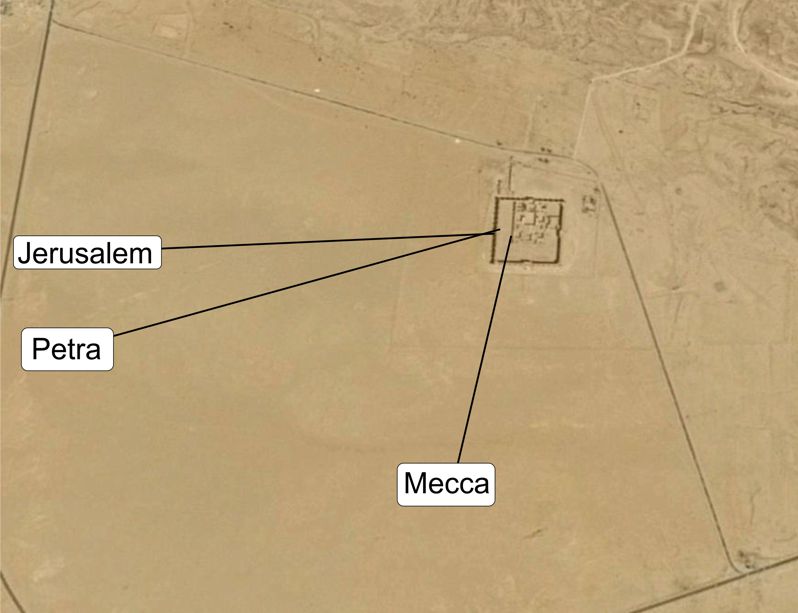
Kufa | Iraq | Qasr Ukhaydir | Mecca | Never |
|
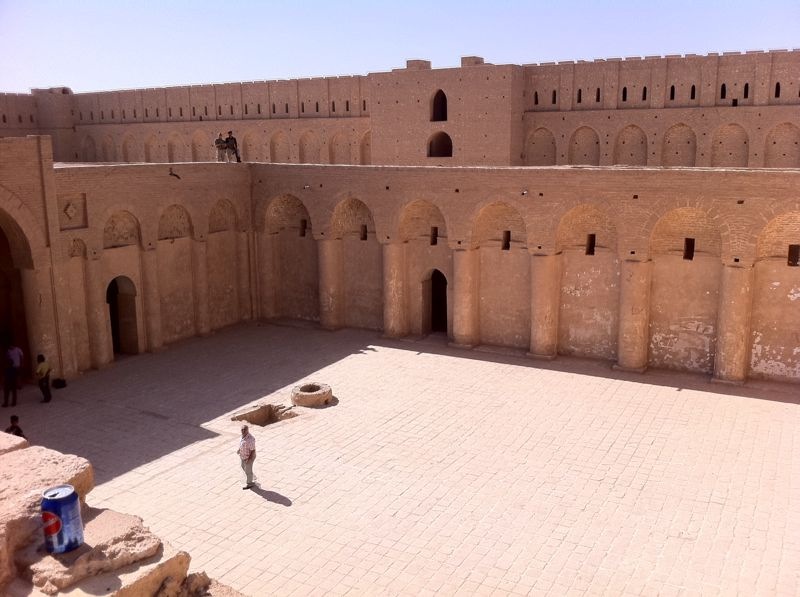
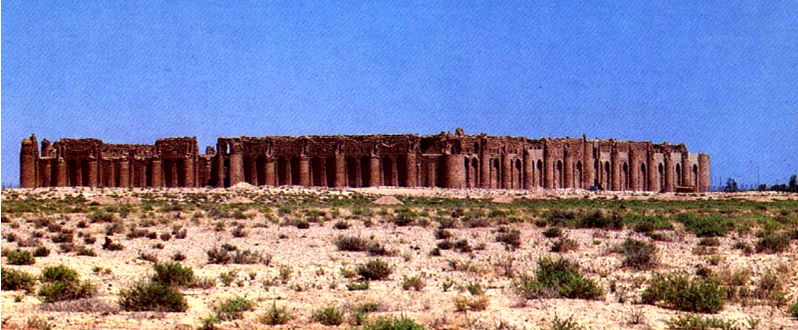
Approximately 120 miles south of Baghdad stand the remains of Ukhaider, a complex encompassing a mosque, palace, and bathhouse enclosed in a rectangular limestone masonry wall measuring 2.6 meters thick and 19 meters high. Based on architectural evidence, researchers put the date of the construction of the palace at between 720 and 800 AD. This 80 year period provokes a serious historical problem, since within this period the Umayyad dynasty gave way to the Abbasids who gained power in year 750 AD. So is this palace Umayyad or Abbasid? First, there are indications, which suggest that the palace is Umayyad, built before 750 AD. Features such as the presence of few semi-circular arches, the limited use of squinches to half-domes, the use of corner slabs to support the scalloped dome are all indices pointing out to the Umayyads whose architecture continued to use these elements before the architectural revolution of the Abbasids introduced the pointed arch, dome squinches and other features. The Umayyads also had the habit of living in desert palaces. But who could have built Ukhaidir during these troubled times when the Umayyad were waging wars against the Kharijit and the Abbasids? Additionally, most princes and wealthy Umayyads had known residences. Similarly, early Abbasid rulers can be ruled out as Al-Saffah, the founder of the dynasty, for example, lived in his palace beside the Persian city of Anbar (about 45 miles west of Baghdad) and died there in 754. His successor Al-Mansur at first lived in his palace between Kufa and the old Persian town of Hira, and later settled in his capital Baghdad. This leaves us with two remaining theories. Creswell's theory
proposes that the construction was due to the nephew of Al-Mansur,
Isa ibn Musa (d. 783/4), who received large sums of money from
the Caliph to prevent him making a claim to the throne. Isa was
somehow promised the Caliphate after Al-Mansur who later changed
his mind in favor of his son Al-Mahdi. Isa was then expelled
from his governorship of Kufa in 778 and made to renounce his
claim to the Caliphate. It is reported that on his expulsion
he returned to his estates and used to visit Kufa every Friday
for the congregational prayer. However, some scholars raised
doubts about this thesis arguing that the two way journey of
200 km from Ukhaidir to Kufa through the desert could not have
been an easy undertaking for a man who is known to have been
a permanent invalid. |
 |
 |
|
|
|
|